MVC 575
Survives
The TR2s with a story of their own: the 20TS prototype, the first two production cars, the Jabbeke car, Wadsworth's private Le Mans car, the rally and Macau winners, the 1955 works team, a museum car, and the replicas to tell apart from them.
Few TR2s have stories of their own that the sources can tell. Two pages here tell such stories: that of MVC 575, the car of the Jabbeke speed test in 1953, and that of the three works cars, PKV 374, 375 and 376, of the Triumph TR2 at Le Mans in 1955. The others are on this page, with what is known of each and what is not. The Belgian coupés have their own story on the Triumph TR2 Francorchamps page, and the cards at the foot of this page list every car with a record.source 1source 2source 3
The 20TS was the prototype Standard-Triumph showed at Earls Court in October 1952, white, as Motor Sport reported. A 2019 auction catalogue gives it the number X505, and Wikipedia, citing Piggott, says it may have been scrapped; no source read records it after the show. The Triumph TR2's history tells its part.source 4source 5source 2source 6
The first two production cars were completed together, at Banner Lane by the TR Register's account.
The first two TR2's (Commission numbers TS1 LHD and TS2 RHD) completed on 22nd July. They were both white with Geranium leather interior.
Both were later restored, and Revington TR records the pair together again in 2004, at the international show the TR Register held at Malvern. Where they are now is not given in any source read.
The first TR2 at Le Mans was a private one. Edgar Wadsworth entered TS1730, No. 62, for the 24 Hours of June 1954 and drove it with John Brown, and it finished 15th after 214 laps, 2,886 km (1,793 miles) at an average of 120.2 km/h (74.7 mph), by racingsportscars' results. Motor Trend gave its fuel consumption as "34.7 mpg for the distance". Motor Sport's report complained that cars which could not keep up with the little Panhards should be refused, and a member of the TR2's pit staff answered in the August issue that it had been the most standard car in the race:
It is not cars like the Triumph which should be refused, but rather the disguised centre-seating racing cars with whom your grossly unfair comparison is made.
The car's registration and its later life are not given in any source read.source 10source 11source 12source 13
J. C. Wallwork's car took the RAC Rally of March 1954 outright, and its class too: the TR2's first great success. The car's commission number and registration are not in any source read, and nor is its later history.source 14
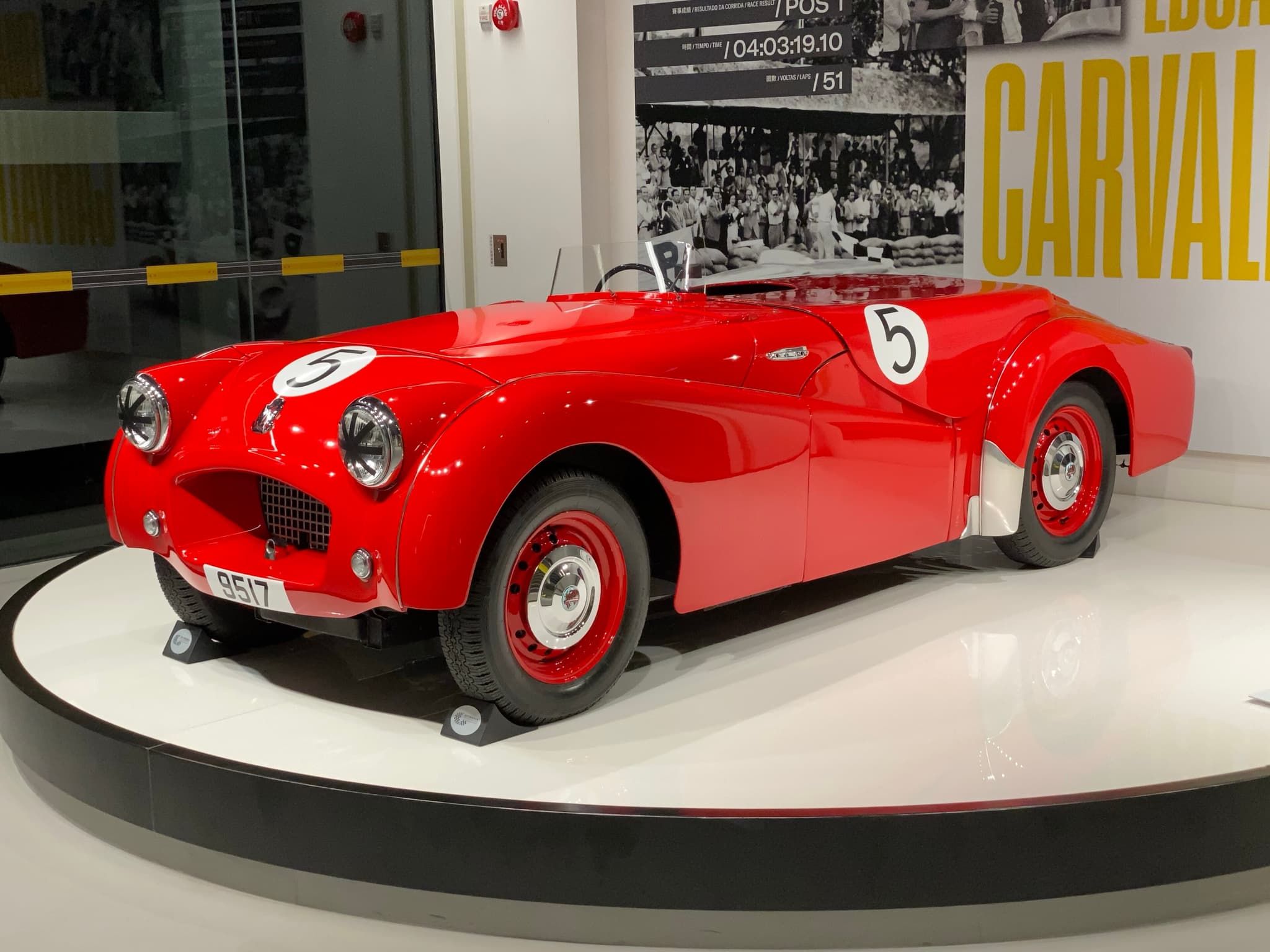
The first Macau Grand Prix, on 31 October 1954, was won by a TR2, with two more in second and third places.
Eddie Carvalho won the gruelling 51-lap first race from Dutoit on essentially the same course as used now in one of three Triumph TR2s prepared by Hong Kong distributor Far East Motors.
The FIA gives the race as about 320 km (200 miles), won in 4 hours, 3 minutes and 1.91 seconds, an average of 78.4 km/h (49 mph). The Macau Grand Prix Museum shows a TR2, but no source read says whether it is the winning car.source 15source 16
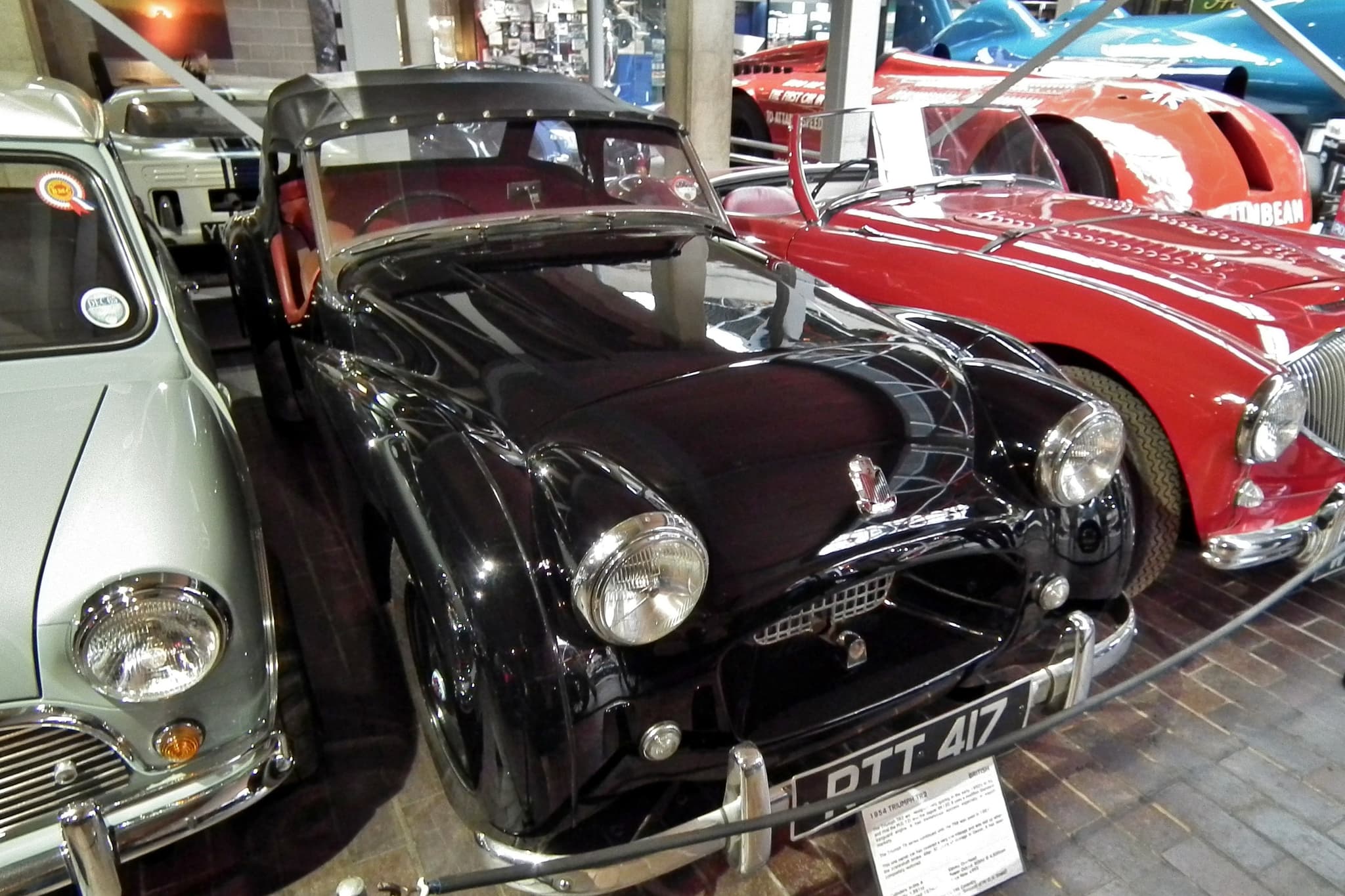
The National Motor Museum at Beaulieu, Hampshire, has a black TR2, the car at the top of this page, photographed in its galleries from 2011 to 2018. No written source read gives its history; in the film below, its presenter tells it: one owner, about 30 years laid up, in the museum's collection since 1998, restored, and the car of the show at the NEC in 2024.source 9
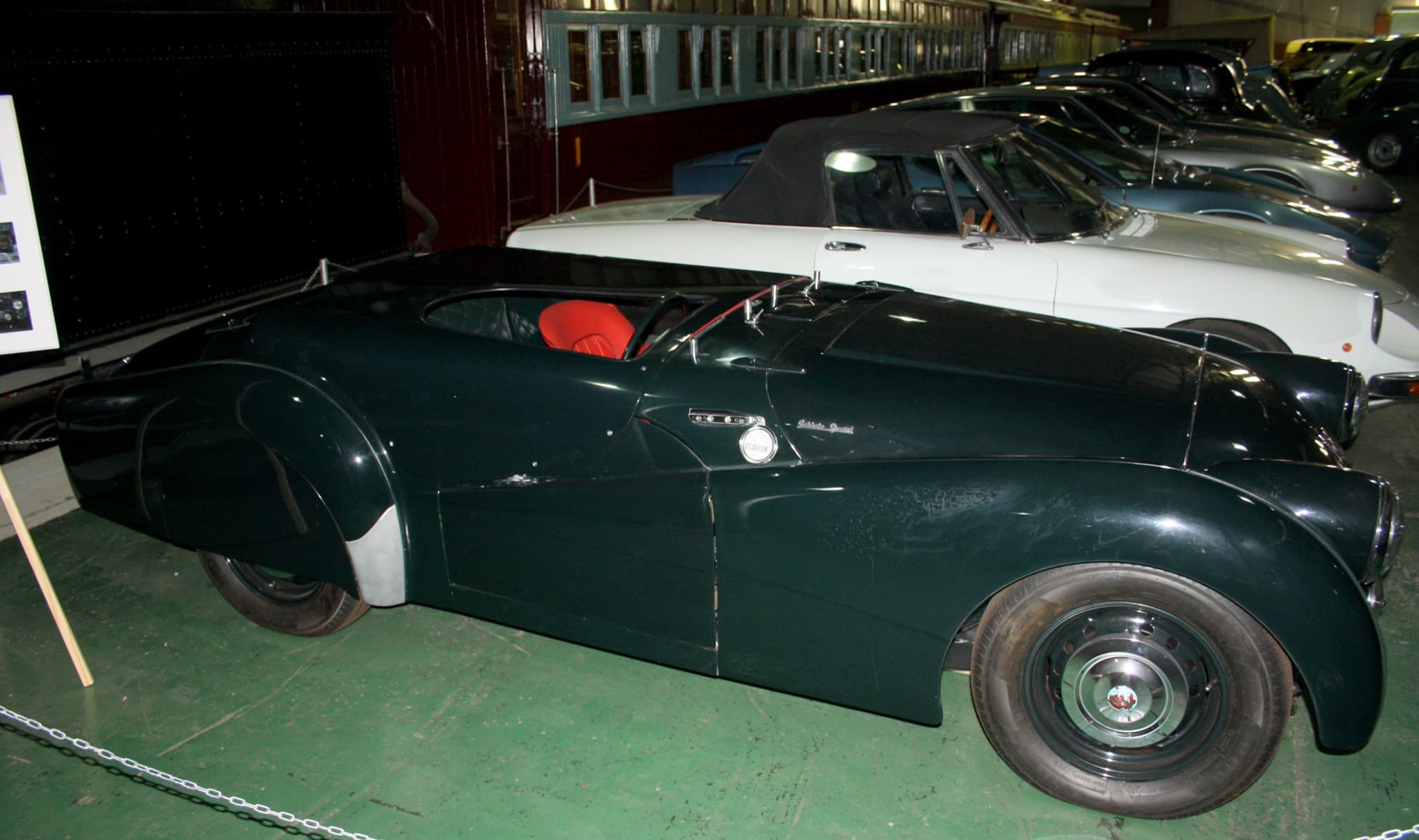
Some cars are made to look like famous ones, and some pictures are labelled as more than they show. A TR2 lettered "Jabbeke Special" was photographed in a South African museum in 2015, while MVC 575 itself was privately owned and under restoration in England, so it is another car dressed in its style. In South Australia, a TR2 bought in Adelaide in 1967 was recommissioned in 1999 as a replica of PKV 374, the Le Mans car. At Gaydon in 2023, MVC 575 was shown beside the Makkina TR25, an electric design study of that year styled after the TR2, which is not a Triumph.
The last TR2 was built in October 1955, so a "1956" TR2 takes its year from its papers, as Triumph TR2 chassis numbers explains.source 9source 1source 17
Survives
Built 1955
Survives
Built 1955
Whereabouts unknown
Built 1955
Whereabouts unknown
Built 1952
Whereabouts unknown
Survives
Built 1953
Survives
Built 1954
Whereabouts unknown
Built 1953
Survives
Every source the site cites is on the sources page.